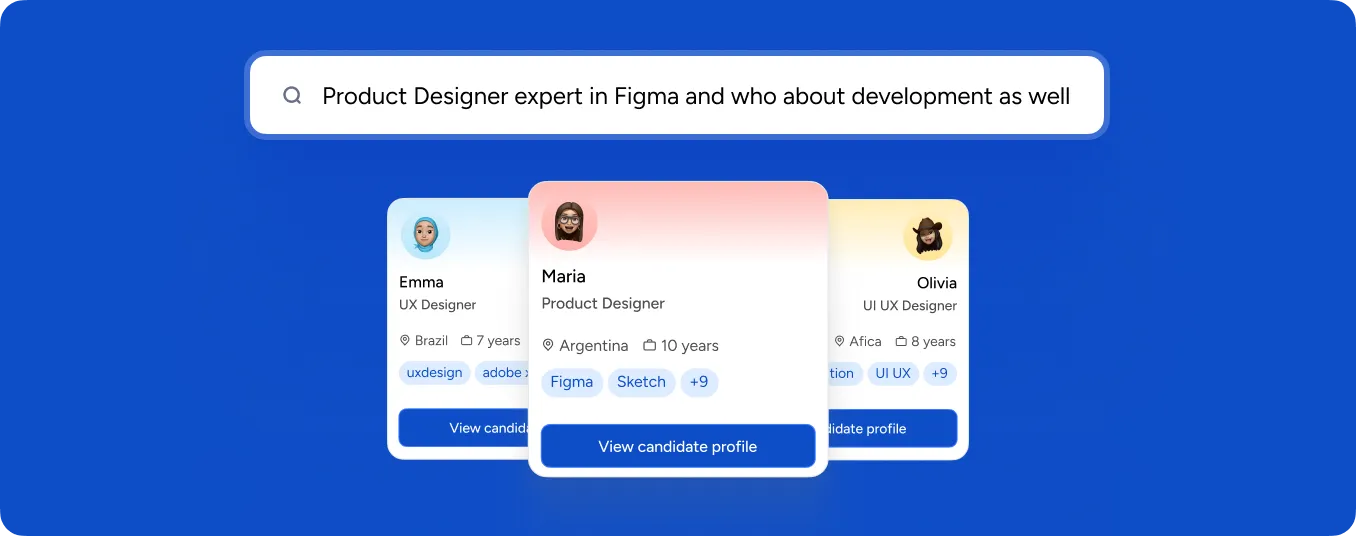
Search vetted Customer Success Managers and shortlist in minutes
See their work and rates, message the ones worth talking to, and hire without a recruiter in the middle.

Top in Sales


What a Customer Success Manager does
They make sure customers actually get value from your product, renew, and ideally expand. Day to day that means:
Running onboarding so new customers reach first value as fast as possible
Managing the ongoing relationship: regular check-ins, quarterly business reviews, watching usage data
Spotting customers who are at risk of churning before they actually churn, and intervening early
Driving expansion: identifying upsell opportunities and handing them to sales, or closing them directly depending on your motion
Acting as the voice of the customer internally, feeding insights back to product and marketing
A strong customer success manager balances revenue protection with genuine care for the customer's outcome. They know when to push and when to listen, and customers trust them. Most SaaS companies hire one when MRR has grown past the founder being able to know every account personally, and retention has started to slip.


What to look for in a Customer Success Manager
The tell is how they talk about a customer they lost. A strong one knows exactly why the customer churned and what could have changed the outcome. When you interview, look for:
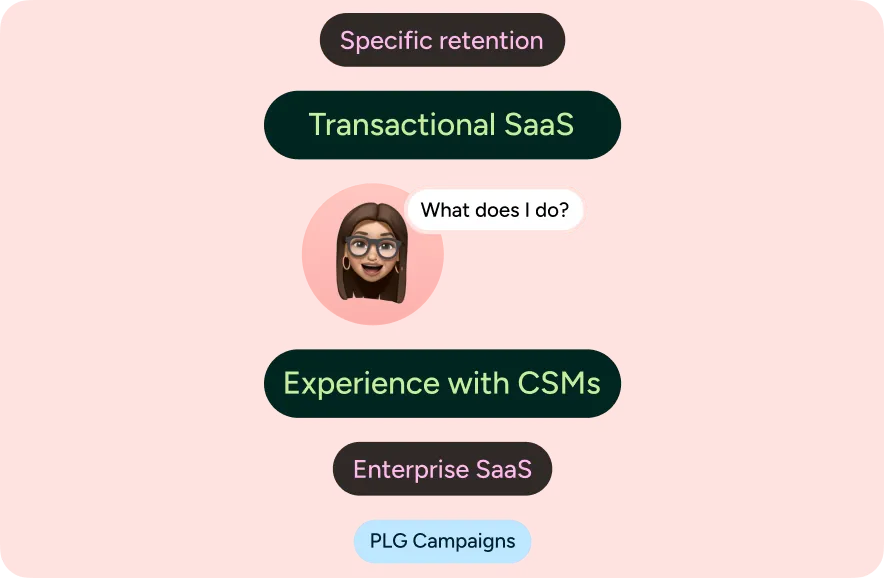
Specific retention and expansion numbers they've owned: gross retention, net retention, NPS, time to value
Experience with your business model. CSMs in transactional SaaS, enterprise SaaS, and PLG companies do very different work
Comfort with both the relationship side and the data side. The good ones use product usage signals seriously
Avoid anyone who treats customer success as glorified support.
Tools a strong one should know:
What a Customer Success Manager costs
One flat $1,999 placement fee when you hire, whatever the rate. No percentage of salary.
Get StartedHow hiring works
Describe the role like you'd say it out loud. Get matched in under a minute.


Scout OS vs the alternatives
| Hiring locally | Job boards | Traditional recruiter | Scout OS | |
|---|---|---|---|---|
| Cost | $90k–$130k/yr salary | Free to post, costly in time | 15–30% of salary, $15k–$30k on a $100k hire | $99/mo + $1,999 flat |
| Time to shortlist | Weeks | Days of sorting | 1–4 weeks | Under a minute |
| Who vets | You | Nobody | The recruiter | Done. ~1 in 300 makes it on |
| Who picks | You | You | The agency | You |
| If it fails | You eat it | Start over | Sometimes a replacement | Next placement free |
| Lock-in | Full salary | None | Retainer or contract | Cancel anytime |
A recruiter's fee scales with the salary, so the better the hire, the more it costs you. On Scout OS it's flat. $1,999 is $1,999 whether the person earns $40,000 or $120,000.
Common questions
Because you see the actual person, their work, and their rate before you talk to anyone — no blind trust in a recruiter's shortlist.
Every profile goes through skills verification and reference checks before it’s searchable. Roughly 1 in 300 applicants makes it onto the platform.
LATAM, Africa, South Asia, and Europe are all searchable and filterable right on the platform.
Your next placement is free — no separate agency fee, no starting the search over from zero.
Everything you need to onboard and pay your hire compliantly is included once you place them.
$100/mo for full access to profiles and messaging, plus a flat $1,999 placement fee when you hire — no percentage of salary.
Search and get matched in under a minute. Most teams shortlist and interview within a week.